Quality and safety monitoring
Providers should have reliable ways of monitoring whether services remain safe, effective and consistent.
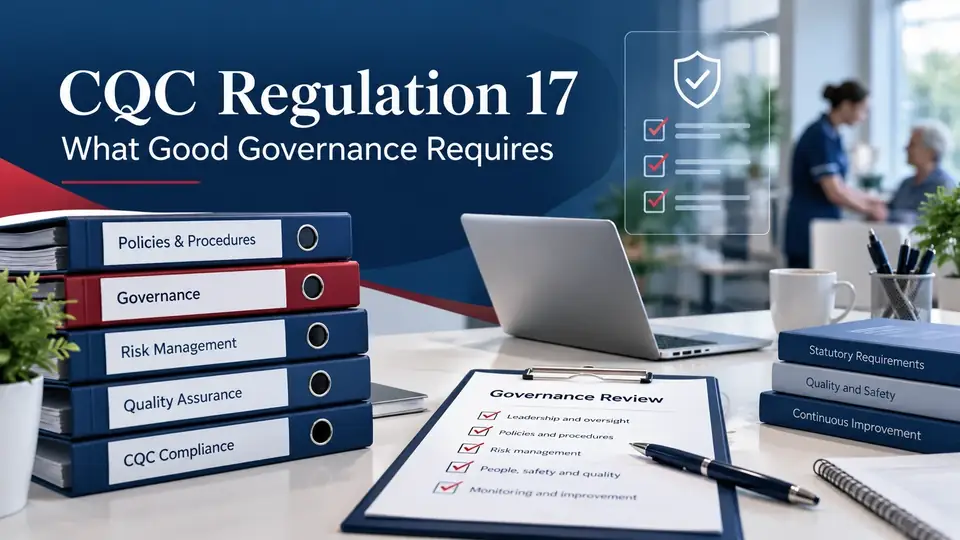
CQC Regulation 17
Regulation 17 of the Health and Social Care Act 2008 (Regulated Activities) Regulations 2014 requires registered providers to operate effective systems and processes for assessing, monitoring and improving the quality and safety of their services. It also covers risk management, accurate records, feedback, governance oversight and continuous improvement.
What Regulation 17 requires
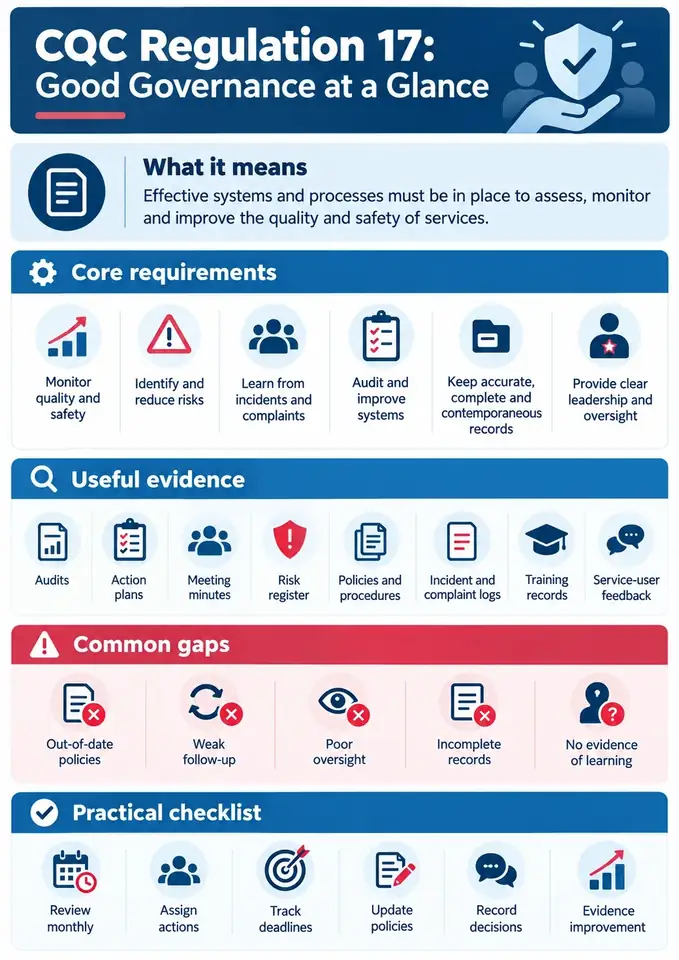
Regulation 17 is commonly referred to as the Good Governance regulation. In practical terms, providers should be able to demonstrate that they have effective systems for understanding how their service is performing, identifying risks and weaknesses, taking action where necessary and checking whether those improvements have worked.
Good governance should be visible in everyday practice. It is not simply a collection of policies or audit documents. CQC may look for evidence that leaders understand the service, monitor quality and safety, respond to concerns and use information to drive improvement.
Core governance areas
Providers should have reliable ways of monitoring whether services remain safe, effective and consistent.
Risks should be identified, recorded, reviewed and acted upon before they develop into larger compliance problems.
Audits should produce useful information and lead to clear actions rather than becoming paperwork that is completed and forgotten.
Governance records should be complete, current and capable of showing what was reviewed, what decisions were made and what action followed.
Complaints, incidents, safeguarding concerns, staff feedback and service-user feedback should inform improvement.
Registered Managers, nominated individuals and senior leaders should be able to demonstrate how they know the service is performing properly.
Useful evidence
The important point is not simply whether these documents exist. Providers should be able to show that the information is reviewed, understood and used to make improvements.
Continuous governance
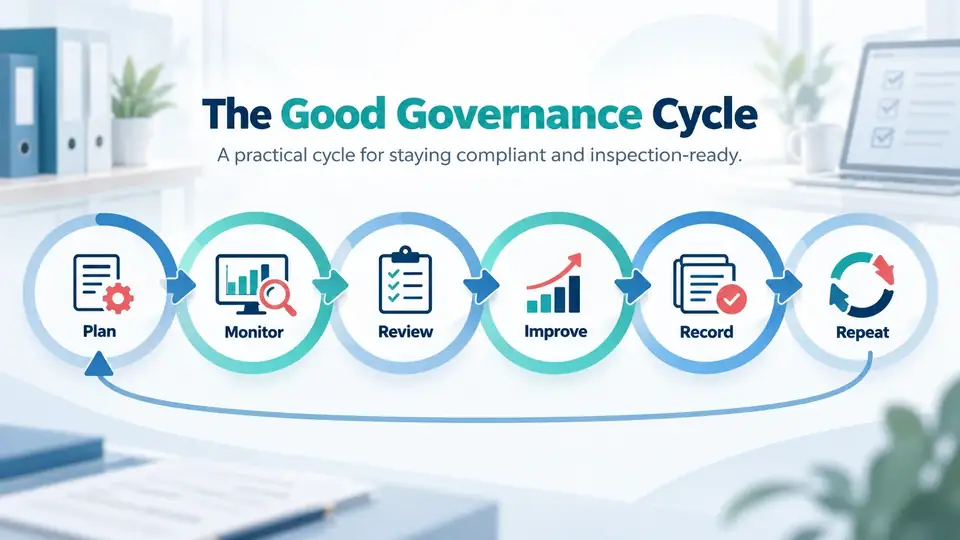
Governance is not something that should only happen before a CQC inspection. Strong providers use an ongoing cycle of planning, monitoring, reviewing, improving and recording.
Plan → Monitor → Review → Improve → Record → Repeat. This cycle helps turn governance from an occasional compliance exercise into part of normal service management.
Common weaknesses
Audits are completed but findings are not translated into owned, time-bound actions.
Policies do not reflect the actual service model, current practice or identified risks.
Meeting records do not clearly show decisions, accountability or follow-up.
Risks are documented but are not actively monitored, escalated or reassessed.
Patterns are not analysed and there is little evidence of preventative action.
Changes are made but providers cannot demonstrate whether they were sustained or effective.
How CQC Consultant can help
CQC Consultant can help providers review and strengthen their Regulation 17 governance systems. Our support can include governance audits, evidence reviews, quality-assurance frameworks, risk-monitoring arrangements, audit schedules, action planning and preparation for regulatory scrutiny.
Where weaknesses have already been identified by CQC, we can help turn findings into a structured remedial action plan and build the evidence needed to demonstrate improvement.
Review existing systems, records and oversight arrangements.
Identify what evidence exists, where gaps remain and how information should be organised.
Build a proportionate system for quality, risk and compliance monitoring.
Convert findings into clear actions, responsibilities, deadlines and follow-up checks.
Regulation 17 FAQs
Regulation 17 is the Good Governance regulation. It requires registered providers to operate effective systems and processes for monitoring quality and safety, managing risks, maintaining appropriate records and improving services.
Evidence can include audits, risk registers, governance meeting records, action plans, incident analysis, complaints, feedback, training records and evidence of completed improvements.
It applies to registered providers carrying on regulated activities, although governance systems should be proportionate to the size, complexity and type of service.
Yes. A mock inspection can test how governance systems work in practice and whether leaders can demonstrate effective oversight.
The provider should understand the concerns, address immediate risks, develop a clear action plan and be able to demonstrate that improvements have been implemented and monitored.
Need help with Regulation 17?
Book a free initial consultation to discuss Regulation 17, governance reviews, compliance audits or improvement planning.